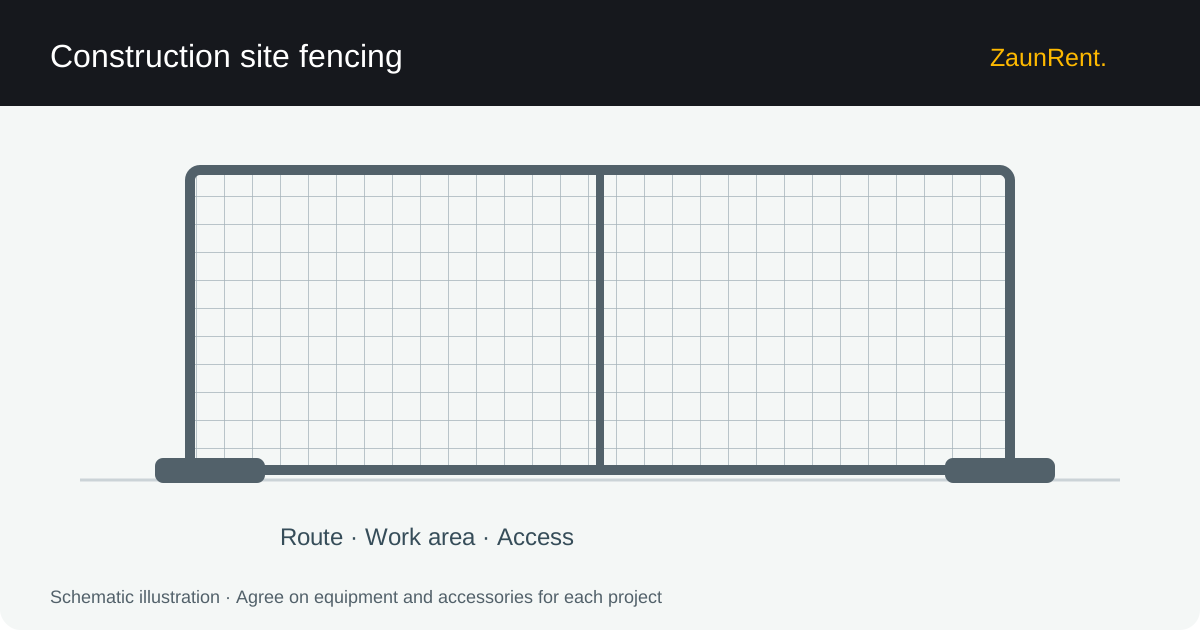
Identify work areas and routes
Mark out the work itself, material storage, unloading areas and space needed for movement. These determine a practical fence route. Consider people outside the site and existing paths too. A site plan shows where bottlenecks may arise and where connections to existing boundaries are needed.
Consider construction phases and deliveries
A construction site fence often changes position during a project. Clarify in advance whether sections will later be moved or extended. Deliveries need suitable access and clear points of contact. When a section is opened, arrangements for maintaining the boundary should already be in place before the vehicle arrives.
Read more: Temporary fencing and Hire temporary fencing.
Organise your enquiry and ongoing use
Provide the fence length, location, hire period and services required. Photos of the ground and access route help with planning. Assign responsibility for inspections and changes during use. ZaunRent hires out mobile systems for Bremen, Hamburg and Hanover; the scope is agreed to suit the specific construction site.
Enquiry checklist
Have the following information ready so we can agree on the scope and arrangements:
- Fence route and work areas
- Planned construction phases
- Delivery access and contacts
- Hire period and services required
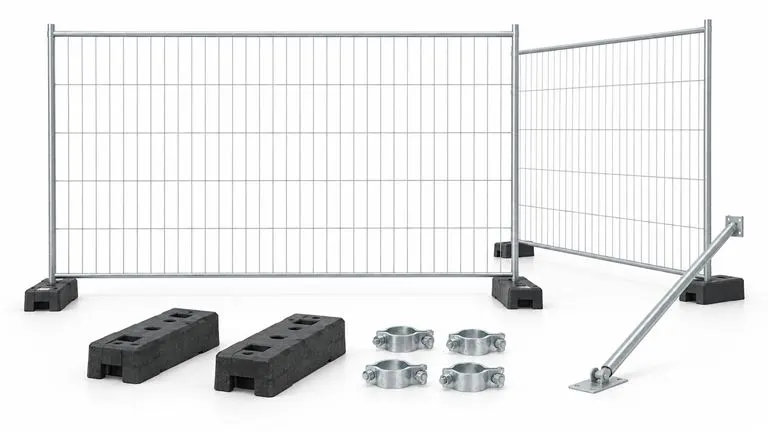
Construction site fencing FAQ
Are construction site fencing and temporary fencing different products?
The terms often describe the same type of portable boundary. What matters is the specific design and its suitability for the project.
Explore related topics
You can find all topics in our Temporary fencing guide. For information on the process, visit Services.